Aldeburgh Festival 2026: Friday 12 – Sunday 28 June
• Britten Pears Arts presents the 77th Aldeburgh Festival in June 2026
• 2026 marks the 50th anniversary of Benjamin Britten’s death. The Festival celebrates both his music and the legacy he and Peter Pears established here, particularly their commitment to developing outstanding young artists, to which the 77th Festival brings renewed focus.
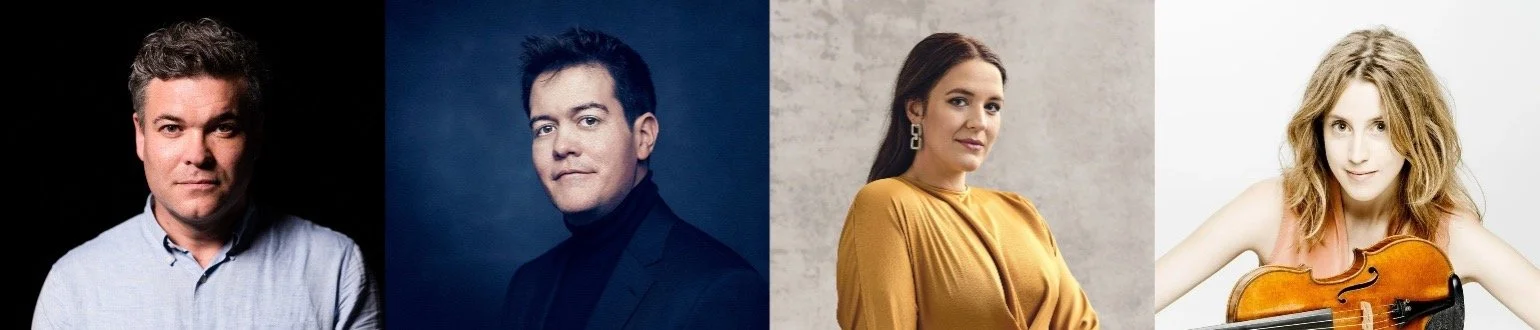
• Conductor, composer and pianist Ryan Wigglesworth is this year’s Featured Artist and leads a circle of artistic collaborators including Vilde Frang, Laura van der Heijden, Steven Osborne and Nicolas Altstaedt
• In 2026 James Baillieu and Ryan Wigglesworth begin a 3-year tenure as Associate Directors of the Britten Pears Young Artist Programme
• Semi-staged production of Debussy’s Pelléas et Mélisande directed by Rory Kinnear and performed by Sophie Bevan, Jacques Imbrailo, Gordon Bintner, Sarah Connolly, and John Tomlinson with conductor Ryan Wigglesworth
• Aldeburgh Festival marks the centenaries of Feldman, Henze and Kurtág
• Continued commitment to new music with 6 world premieres, of which 3 are Britten Pears Arts commissions; 5 co-commissions and 5 UK premieres. Composers include Eleanor Alberga, Lera Auerbach, Tom Coult, Tansy Davies, Brett Dean, Lisa Ilean, Nathalie Joachim, Cassie Kinoshi, Freya Waley-Cohen, and Ryan Wigglesworth
• Orchestras include BBC Scottish Symphony Orchestra and Ryan Wigglesworth, BBC National Orchestra of Wales and Kevin John Edusei, London Sinfonietta and Christian Karlsen, Britten Sinfonia and Gemma New, Royal Academy of Music Symphony Orchestra and Ryan Bancroft, Knussen Chamber Orchestra and Ryan Wigglesworth
• Ensembles include SANSARA with Tangram, La Nuova Musica and David Bates, Dunedin Consort and Mahogany Opera, Aldeburgh Festival Singers and Jamie Burton
• Chamber music from Sphinx Piano Quintet, the Maxwell, Sacconi, Carducci, Piatti and Belcea Quartets as well as specially formed partnerships (Nicolas Altstaedt+; Vilde Frang+; Laura van der Heijden+)
• Artists include Pierre-Laurent Aimard, Nathan Amaral, Julius Asal, Sophie Bevan, Kristian Bezuidenhout, Florian Caroubi, Adèle Charvet, Gordon Bintner, Adrian Brendel, Helen Charlston, Sarah Connolly, Lise Davidsen, Guillame de Chassy, Julius Drake, Irene Duval, Sterling Elliott, Iestyn Davies, Isabelle Faust, Federico Fiorio, Phillippe Grisvarde, Amiri Harewood, Celia Hatton, Martin Helmchen, Benjamin Hulett, Jordan Hunt, Jacques Imbrailo, Guy Johnston, Francois Joubert-Caillet, Genevieve Lacey, Francesca Lauri, James McVinnie, Laurent Naouri, Steven Osborne, Lawrence Power, Nick Pritchard, Aylen Pritchin, Carolyn Sampson, Sean Shibe, Rakhi Singh, Chiara Skerath, Nicky Spence, John Tomlinson, Elena Urioste, Carina Vinke, Tamsin Waley-Cohen, Maria Włoszczowska
• Open every day during the Festival: The annual exhibition at The Red House, Aldeburgh; Before Life and After which celebrates the people that surrounded Britten in the last three years of his life and artist Jane Mackay celebrates Britten’s music in a collection of 100 paintings• Big Day Out takes place for the second year and celebrates the birthplace of the Festival in Aldeburgh with family-friendly events, pop up performances from local stars, Festival Artists and more
• Visual Art at Snape Maltings includes Ffiona Lewis’ Slung Mugs, Kate Giles’ Solid Air and an exhibition by Ryan Gander
• BBC Radio 3 brings live music to listeners around the world with a series of broadcast Festival Concerts
The programme for the 77th Aldeburgh Festival takes place from Friday 12 to Sunday 28 June. Aldeburgh Festival has always been a place where music is made in full view of its past and its future; where composers, performers and audiences meet in the “holy triangle” Britten believed was essential to artistic life. In 2026, fifty years since Britten’s death, Britten Pears Arts reaffirms that principle as a living manifesto. 1976 marked an ending, but also a beginning: the moment the care, curiosity and exacting standards Britten and Pears brought to nurturing young artists became the enduring thread of the Festival and this organisation’s identity.
The 2026 Festival convenes artists who know one another’s work deeply—musicians who share a language of trust, risk and detail. Featured Artist Ryan Wigglesworth leads a circle of collaborators including Vilde Frang, Sophie Bevan, Steven Osborne, Lawrence Power and Nicolas Altstaedt. They come not simply to perform, but to pass on what they have learned: forming chamber groups, standing side by side with young players, and allowing music to reveal its meaning through shared attention.
In 2026 James Baillieu and Ryan Wigglesworth begin a 3-year tenure as Associate Directors of the Britten Pears Young Artist Programme. The aim is to build academies in which young, aspiring artists can flourish alongside their mentors and be celebrated in Aldeburgh Festival programmes, and to consider how important this venture is at a difficult time for the arts.
At the heart of this commitment is the new Festival Academy, directed by James Baillieu with Lise Davidsen, Caroline Dowdle, Julia Faulkner and Nicky Spence as faculty. Their work, and the Summer Academy that will follow it for instrumentalists and led by Ryan Wigglesworth, continues the legacy Britten and Pears established and marks a new way for the Young Artist Programme to work, enabling young artists to flourish when surrounded by the very best musicians, challenged, nurtured and invited to experience the generosity of audiences at Snape Maltings.
Pelléas et Mélisande, directed by Rory Kinnear with designs by Vicki Mortimer and lighting by Paule Constable, and performed by Sophie Bevan, Sarah Connolly, Jacques Imbrailo, Gordon Bintner, John Tomlinson and alumni of the Britten Pears Young Artist Programme, opens the festival with a work of delicacy and depth. Alongside Britten’s own late works, music by Feldman, Crumb, Kurtág and Henze sits beside 11 new works by Lera Auerbach, Tom Coult, Tansy Davies, Brett Dean, Lisa Illean, Natalie Joachim, Freya Waley-Cohen, Ryan Wigglesworth and others, maintaining Britten Pears Arts’ commitment to the composers of today and the artists who bring their work to life.
Andrew Comben, Chief Executive, Britten Pears Arts commented, ‘Aldeburgh Festival 2026 draws its joy from the energy of the musicians who gather here and the future they help reveal. At the heart of this is Ryan Wigglesworth, who I’m delighted to welcome as this year’s Featured Artist. His long association with the Festival will be reflected in performances as conductor, pianist and composer, joined by many of his closest artistic collaborators. 2026 marks fifty years since the death of our Founder, Benjamin Britten. His and Peter Pears’ commitment to supporting young artists remains central to our purpose, and the Festival and Summer Academies – led by James Baillieu and Ryan Wigglesworth – strengthen that legacy by placing outstanding young performers alongside world-class musicians as a core part of our programming. The Festival opens with a semi-staging of Debussy’s Pelléas et Mélisande, with an all-star cast and creative team, followed by a wide-ranging programme of opera, orchestras, choirs, chamber music, song, film, talks, walks and a fascinating visual arts programme featuring Ryan Gander, Ffiona Lewis and Kate Giles. Set across Snape Maltings, Aldeburgh and other Suffolk locations it continues to offer a beguiling combination of music, landscape and creative possibility. We really look forward to welcoming everyone in June.’
Ryan Wigglesworth this year’s Featured Artist commented, ‘Making music at Snape Maltings over the past 25 years has been one of the great pleasures of my life. From the start, it felt like home – a place where the most important friendships were forged, a place to grow and develop artistically. So, the invitation to be “Featured Artist” for the 2026 Aldeburgh Festival was a very special and joyous privilege. A strong sense of “family” has always been central to the spirit of the Aldeburgh Festival and accounts for why so many musicians feel drawn to put down artistic roots here. And what bliss it has been programming concerts involving so many of my dearest friends and colleagues:
Nicolas Altstaedt, Sophie Bevan (literally family!), Sarah Connolly, Jacques Imbrailo, Rory Kinnear, Vicki Mortimer, Steven Osborne, Lawrence Power, John Tomlinson, as well as all the members of the two orchestras I’m lucky to be associated with: the BBC Scottish Symphony Orchestra and the Knussen Chamber Orchestra. (the latter itself a legacy of my “thanks-to-Snape” friendship with the late, deeply missed Oliver Knussen). It allows me the rare opportunity to wear all my hats under one roof, as it were: playing chamber music and song, premiering my new piece for Lawrence Power and the KCO, and conducting works that mean a great deal to me personally – none more so than Debussy’s Pelléas et Mélisande. It really is a great honour.’
James Baillieu, Associate Director, Britten Pears Young Artist Programme commented, ‘I am deeply honoured and delighted to be appointed, alongside Ryan Wigglesworth, as Associate Directors of the Britten Pears Young Artist Programme for 2026–2028. The Britten Pears Programme played a formative role in my own development as a young artist, and it is a profound privilege to return in this new capacity to contribute to its future. This appointment represents a deeply meaningful opportunity to help nurture the next generation of musicians within the creative and inspiring context that Britten and Pears established. I am excited to bring my experience, connections, and ideas to the role, and to be part of an ambitious new chapter in the life of this distinguished programme.’
Detailed Programme information
Opera
Debussy’s Pelléas et Mélisande
- Aldeburgh Festival opens with a semi-staging of Debussy’s Pelléas et Mélisande directed by Rory Kinnear, with Featured Artist Ryan Wigglesworth conducting the BBC Scottish Symphony Orchestra and an all-star cast, including Jacques Imbrailo (Pelléas) and Sophie Bevan (Mélisande) as the two lovers, Gordon Bintner (Golaud), Sarah Connolly (Geneviève) and John Tomlinson (Arkel). The creative team includes set designer Vicki Mortimer and lighting designer Paule Constable.
- Debussy’s opera is a dark fairytale caught in a dream. “No time, no place. No big scene.” So Debussy wrote to his teacher Ernest Guiraud in 1890. It was a kind of mission statement of his ideal style of opera: in a world of increasingly “big scenes” – courtesy of Wagner and Verdi – Debussy wanted something radically different.
- After several false starts, he finally found what he was looking for in Maurice Maeterlinck’s enigmatic play Pelléas et Mélisande, full of symbols, ambiguous meanings and shadowy characters. It was the perfect home for Debussy’s innovative approach to opera, and for his startlingly new musical language. He finished Pelléas et Mélisande, his only completed opera, in 1902. The critics were perplexed, but in more recent years it has become one of the most admired works in the repertoire, beguiling audiences time and again with its elusive, shimmering beauty (12 & 13 June, 7.30pm, Snape Maltings Concert Hall).
Featured Artist: Ryan Wigglesworth
- Following two performances of Pelléas et Mélisande, Ryan Wigglesworth and the BBC Scottish Symphony Orchestra’s third concert sees pianist Steven Osborne perform Ravel’s jazz infused Piano Concerto in G, written following a revelatory trip to the US in 1928, and Wigglesworth’s own Piano Concerto which looks back through musical history. The programme also features Elizabeth Ogonek’s All These Lighted Things, inspired by Thomas Merton’s poem, it draws fascinating sounds from every instrument (14 June, 7.30pm, Snape Maltings Concert Hall).
- Welcome to the Orchestra invites young people and school-aged children, alongside grown-up audience members, to experience the magic of the symphony orchestra. The BBC Scottish Symphony Orchestra explore and perform two of Britten’s most joyful and energetic works: Welcome Ode – one of his final works – written for the Queen’s visit to Ipswich in her Jubilee Year in 1977 which will be performed by the Aldeburgh Festival Chorus, bringing together local amateur singers through an open call, and the Young Person’s Guide to the Orchestra, which is what it says on the tin: a comprehensive look at every instrumental family in a symphony orchestra. Actor and director Rory Kinnear writes a new narration (15 June, 11am, Snape Maltings Concert Hall).
- Cellist Nicolas Alstaedt is joined by musical friends soprano Anna-Lena Elbert, violinist Benjamin Marquise Gilmore and Featured Artist Ryan Wigglesworth at the piano. Inspiration for composers comes from a variety of sources, but in this programme the muse is at the forefront. Birtwistle’s 9 Settings of Lorine Niedecker were composed as both a gift for fellow composer Elliott Carter and a tribute to the poetry of Niedecker. Britten’s Cello Sonata in C was the first piece he composed for Mstislav Rostropovich, having met him at a concert in 1960. Shostakovich’s Seven Romances on Poems by Alexander Blok were composed for Rostropovich’s wife, the soprano Galina Vishnevskaya: she premiered the piece in 1967 with her husband playing the cello part. The concert starts with the UK premiere of Tom Coult’s Craftsmen and Clowns (16 June, 11am, Britten Studio).
- Death, time, faith, love, sleep and sleeplessness are the subjects of this recital from soprano Sophie Bevan and pianist Ryan Wigglesworth. In Mussorgsky’s Songs and Dances of Death the figure of death pays a visit four times; in Britten’s The Poet’s Echo, the songs are aching with loss and regret, as well as the torment of insomnia. Wigglesworth’s Till Dawning sets the spiritual poetry of George Herbert in his cycle for voice and piano in which gentle meditations alternate with bold declarations of faith, and the acceptance of sorrow. A selection of Britten's folksongs closes the programme (18 June, 3pm, Britten Studio).
- The Knussen Chamber Orchestra and Wigglesworth present two concerts in the final weekend of the Festival. The first, sees the world premiere of Wigglesworth’s own Viola Concerto, a Britten Pears Arts commission, and written for his regular collaborator Lawrence Power, who also opens the programme with Britten’s Elegy for solo viola. Brahms’ Symphony No. 2 is generally considered his sunniest work, and he wrote jokingly to a friend beforehand that ‘The new symphony is so melancholy that you won’t stand it’ (27 June, 7.30pm, Snape Maltings Concert Hall). The Knussen Chamber Orchestra’s second concert opens with Vilde Frang and Lawrence Power performing Britten’s Double Concerto for violin and viola – one of his early student works. Wigglesworth looks back to Bach in his touching tribute to violinist Laura Samuel in For Laura, after Bach. The inspiration was the performance of Bach’s Violin Partita in D minor, performed at her funeral. Brahms’ Piano Quintet in F minor closes the Festival, and is played by Vilde Frang, Aylen Pritchin (violin), Lawrence Power (viola), Adrian Brendel (cello) and Ryan Wigglesworth (piano) (28 June, 5pm, Snape Maltings Concert Hall).
Britten Pears Young Artists Programme & Festival Academy
- The Festival Academy is led by James Baillieu, who has invited Nicky Spence, Julia Faulkner and Caroline Dowdle as tutors. The course will give young artists, specifically singers and collaborative pianists, full immersion in the Aldeburgh Festival, performance opportunities and intensive study on their favourite song repertoire.
- One of today’s greatest singers, soprano Lise Davidsen, is joined by regular collaborator pianist James Baillieu for an all-Schubert recital. In his short life Schubert wrote 600 songs and this programme presents the vast scope of the composer’s exploration of human behaviours and emotions from yearning to fear, intense rapture to encounters with death, and the discovery of light and sound (13 June, 3pm, Snape Maltings Concert Hall).
- Following their Masterclass with Lise Davidsen, alumni of the Britten Pears Young Artist Programme join pianist James Baillieu to perform a recital of German Lieder (14 June, 5pm, Peter Pears Recital Room, Snape Maltings).
- Ryan Wigglesworth and James Baillieu, in their new roles as Associate Directors of the Britten Pears Young Artist Programme, discuss how to best serve the next generation of performers, with an overview of our plans for the duration of their time with Britten Pears Arts (26 June, 6pm, Peter Pears Recital Room, Snape Maltings).
- Festival Academy Masterclasses with soprano Lise Davidsen (12 June, 2pm); James Baillieu (21 June, 2pm); pianist and vocal coach Caroline Dowdle (22 June, 2pm); soprano and vocal coach Julia Faulkner (23 June, 2pm); tenor Nicky Spence (25 June, 2pm. All in the Peter Pears Recital Room, Snape Maltings).
- Open Coaching: Britten Pears Young Artists and professional coaches will be happening throughout the morning at The Red House and Snape Maltings. These are behind-the-scenes moments where members of the public are invited to observe and understand these important mentoring sessions (22 June. 10.30am – 1pm, The Red House) and (24 & 25 June, 10.30am – 1pm, Snape Maltings).
- Festival Academy Recital: Following a week of coaching and masterclasses, Britten Pears Young Artists from the Festival Academy will perform a varied programme of song (26 June, 11am, Aldeburgh Church).
Britten works being performed at the 77th Aldeburgh Festival
- A complete list of Britten works being performed at the 77th Aldeburgh Festival can be found in the Notes to Editors at the end of the press release.
Centenaries of Feldman, Henze and Kurtag
- Britten Pears Arts marks the centenary of three hugely influential composers of the 20th century: Morton Feldman (12 January 1926), Hans Werner Henze (1 July 1926) and Gyorgy Kurtág (19 February 1926).
- Henze’s Voices is performed by the London Sinfonietta who commissioned and premiered the work in 1973. Songs of protest and resistance, the work features four languages and a dazzling variety of musical styles – from cabaret to rigorous contemporary to light opera to improv, and 70 different instruments including Trinidad steel drums, marimba and log drum. Sixteen of the original 23 songs will be performed in this concert conducted by Christian Karlsen with mezzo-soprano Carina Vinke and tenor Benjamin Hulett. The programme will also feature three new works by Nathalie Joachim, Louise Drewett and Aldeburgh Young Musicians/ Patrick Bailey arr. Louise Drewett, co-commissioned with the London Sinfonietta (17 June, 4pm, Britten Studio).
- Pianist Steven Osborne performs a recital of Feldman and Crumb. Towards the end of his life Feldman became fascinated by almost symmetry: structures or objects which appeared to be regular, but which in fact contained subtle beats of variation. He wrote of the “marvellous shimmer” of patterns found in old rugs, and the perfectly imperfect design of the Babylonian Palais de Mari seen in a photograph at the Louvre. Crumb’s A Little Suite for Christmas is similarly inspired by art: the 14th-century frescoes by Giotto, in the Arena Chapel in Padua. The programme also features examples of Feldman’s early piano music, along with Crumb’s Processional, described by the composer as “an experiment in harmonic chemistry” (18 June, 11am, Britten Studio).
- Pierre-Laurent Aimard returns to Snape Maltings to perform a piano recital featuring a number of miniatures from Kurtág’s Játékok alongside a selection of Schubert dances, waltzes and Ländler (21 June, 3pm, Britten Studio).
- Milestones and Memory - Composing a Century: Anniversaries represent a good moment to reflect on past, present, and future. 2026 sees anniversaries for Kurtág, Henze and Feldman as well as the 50th anniversary of Britten’s last Festival in June 1976 (and his death in December that year). Join Dr Lucy Walker and guest speakers for an illustrated deep dive into this subject (23 June, 11am, Britten Studio)
- The Carducci Quartet performs Kurtág’s 12 Microludes for String Quartet Op.13, with which he invented an entirely new concept: the “microlude”, a tiny, condensed and intense moment of expression, only two of them lasting more than a minute. At the same time, Kurtág pays homage to his predecessors: fellow miniaturist Anton Webern and the Preludes of J.S. Bach (23 June, 3pm, Britten Studio).
- Guy Johnston opens Vilde Frang and Friends recital with Kurtág’s Signs, Games and Messages, a work which evolved over a number of years, arranged variously for solos or combinations of string instruments. The solo cello takes the spotlight here (27 June, 11am, Snape Maltings Concert Hall).
New Music
- 6 world premieres, of which 3 are Britten Pears Arts commissions; 5 co-commissions and 5 UK premieres.
- New works by Eleanor Alberga, Lera Auerbach, Tom Coult, Tansy Davies, Brett Dean, Lisa Illean, Natalie Joachim, Cassie Kinoshi, Freya Waley-Cohen, Ryan Wigglesworth and others, maintaining Britten Pears Arts’ commitment to the composers of today and the artists who bring their work to life.
- See full list of new music in the notes to editors below.
Orchestras
- BBC Scottish Symphony Orchestra – see above under Ryan Wigglesworth.
- Britten Sinfonia present two concerts at this year’s Festival. Gemma New conducts a programme featuring conversations with the past and present. Lisa Illean’s Chansons looks back to songs written in the 15th-century by Gilles Binchois and recorder player Genevieve Lacey premieres a new work by Illean for recorder and pre-recorded sounds. Steve Stelios Adam’s et døgn (“one day”) for recorder with electro-acoustics is a hauntingly beautiful exploration of sound, while Brett Dean’s Carlo is a kind of psychological portrait of the 16th-century composer Carlo Gesualdo. The programme is completed with Britten’s Cello Symphony, originally written for Rostropovich and performed here by Laura van der Heijden (17 June, 7.30pm, Snape Maltings Concert Hall). For their second concert, mezzo-soprano Helen Charlston joins Britten Sinfonia for a programme featuring tales from mythology set to music from three centuries. Haydn’s Ariana a Naxos aims for calm resignation but is mainly spitting with rage; Charpentier’s Médée is another scorned woman and Britten’s Phaedra – his last vocal work that was premiered in the 1975 Aldeburgh Festival by Janet Baker – depicts a journey from madness to purity. Woolrich’s Ulysses Awakes converts Monteverdi’s aria into a solo for viola and Stravinsky’s Apollon Musagète was written for a ballet. Britten’s early work Young Apollo opens the concert (18 June, 7.30pm, Snape Maltings Concert Hall).
- BBC National Orchestra of Wales and conductor Kevin John Edusei present two concerts at this year’s Festival. The first sees the world premiere of Tansy Davies’ new 25-minute Percussion Concerto written for Colin Currie, who has is always looking to expand the solo percussion repertoire. The programme also features John Adam’s Short Ride in a Fast Machine and Shostakovich’s Symphony No. 10 (19 June, 7.30pm, Snape Maltings Concert Hall). In the second concert, Freya Waley-Cohen’s new Violin Concerto receives its world premiere performed by the composer’s sister, Tamsin Waley-Cohen. Freya Waley Cohen said, ‘As a child, every night when I went to bed, Tamsin would be practising her violin in the next-door room, so the sound of her playing violin became the thing I dreamed to. When I write for violin, her sound is what I hear in my head: the way she phrases things, breathes with the music, and how the different registers of the violin come to life in her hands. As I write my first violin concerto, I am thinking of her musicality, and the sound of her violin mixed with my dreams.’ Elizabeth Ogonek was inspired by the Polish poet Wisława Szymborska and describes a puzzling dream for her orchestral work Sleep & Unremembrance. Rachmaninoff’s Symphonic Dances are part musical autobiography, part life-affirming final flourish and close the programme (20 June, 7.30pm, Snape Maltings Concert Hall).
- The Royal Academy of Music Symphony Orchestra and conductor Ryan Bancroft are joined by mezzo-soprano Sarah Connolly to perform Zemlinsky’s sumptuous Six Songs after Poems by Maeterlinck (orchestrated by Christopher Austin). The Belgian author was clearly in vogue among composers in the early 1900s, Debussy having a few years before based an opera on his Pelléas et Mélisande. The programme also includes the late Gubaidulina’s Fairytale Poem in which a piece of chalk with dreams is the protagonist and Prokofiev’s Symphony No. 5, one of his most powerful and stirring works (26 June, 7pm, Snape Maltings Concert Hall).
Ensembles
- Award-winning composers Alex Ho and Rockey Sun Keting are part of the trailblazing artist collective Tangram, who are creating a choral theatre piece with choir SANSARA, conducted by Tom Herring, and based on the words of Chinese female poets across 1000 years of history. Co-commissioned by SANSARA and the Netherlands Chamber Choir with support from PRS Foundation, Leche Trust, Radcliffe Trust and Vaughan Williams Foundation (19 June, 4pm, Britten Studio).
- La Nuova Musica offers the rare chance to hear Handel’s very first oratorio, Il Trionfo del Tempo e del Disinganno, composed when he was just 21. Even in this early work, he displays the seemingly effortless lyrical ease and psychological intrigue of his later works. David Bates conducts from the harpsichord and leads a stellar cast including Federico Fiorio (Belezza), Chiara Skerath (Piacere), Iestyn Davies (Disinganno) and Nick Pritchard (Tempo) (23 June, 7pm, Snape Maltings Concert Hall).
- Aldeburgh Festival Singers conducted by Jamie Burton perform Britten’s Sacred and Profane, composed only a year before he died. This piece sits at the centre of this choral programme which also features further works by Britten, Weelkes and Wilbye (24 June, 7.30pm, Blythburgh Church).
- Dunedin Consort and Mahogany Opera present In the Belly of the Beast, a new show centred around three cantatas by neglected Baroque composer Élisabeth Jacquet de la Guerre. Based on three biblical stories, they are full-blooded explorations of creation, fate and sacrifice. Directed by Jennifer Fletcher with soprano Carolyn Sampson at the heart of the performance, the text is translated by Toria Banks, and produced in partnership by Mahogany Opera, Dunedin Consort and Hera for UK performances in 2026 (25 June, 7pm, Britten Studio).
Chamber Music
- Sphinx Piano Quintet comprises violinists Nathan Amaral and Elena Urioste violist Celia Hatton, cellist Sterling Elliott and pianist Amiri Harewood. They present a programme of American and British Chamber music including Coleridge Taylor Perkinson’s String Quartet No.1 which is based on the spiritual Calvary; William Grant Still’s Suite inspired by three sculptures created during the Harlem Renaissance in the 1930s; the UK premiere of Cassie Kinoshi’s Songs of Kinship; Florence Price’s Piano Quintet and Bridge’s Phantasie (14 June, 3pm, Britten Studio, Snape Maltings).
- The Maxwell Quartet presents a programme featuring the UK premiere of renowned British composer Eleanor Alberga’s String Quartet No. 4, alongside Prokofiev and Brahms’ Second String Quartets (15 June, 3pm, Britten Studio).
- Departure is a music and dance performance by movement artist Masumi Saito and composer/musician An-Ting that was developed during a Britten Pears Arts Residency and explores themes of death, ritual, and the spirit. The work reimagines a funeral ceremony inspired by the artists’ East Asian heritages as a performance and invites the audience to join in a contemplative space (16 June, 2pm, Peter Pears Recital Room, Snape Maltings).
- Olivia Chaney’s deep connection to the music of Purcell runs throughout her life. During a Britten Pears Arts Residency in 2025, Chaney explored the versatility and vibrancy of Purcell‘s songs, travelling afterwards to record her new album in New York. Back at Snape Maltings she performs songs from her album alongside a star-studded chamber ensemble featuring violinists Jordan Hunt and Rakhi Singh and organist James McVinnie (18 June, 10pm, Britten Studio).
- The Sacconi Quartet has been described by the Telegraph as “a quartet of genuine substance” and are frequently applauded for their beautifully blended sound. They have long been a champion of new music, and this programme includes Freya Waley-Cohen’s Dances, Hymns and Songs for Friendship, alongside Rachmaninoff’s Romance, written when he was 17, and Ravel’s String Quartet in F (20 June, 11am, Orford Church, Orford).
- Last Impressions: Schubert’s Quintet in C has a curiously time-bending quality. It is a late work, composed only two months before the composer’s death in 1828. But at the same time, it is the work of a young man: Schubert was only 31 when he died. It then languished for over 20 years, before being finally published in 1853, as if a new work. Performed here by violinists Irene Duval and Magnus Johnston, violist Brett Dean and cellists Guy Johnston and Laura van der Heijden (21 June, 11am, Britten Studio, Snape Maltings).
- The Carducci Quartet performs Steve Reich’s WTC 9/11 which was composed a few years after the terrorist attack on the World Trade Centre. The string quartet “speaks” the words of emergency responders and grieving relatives, as well as thrumming with the anxious, digital tones of a phone off the hook. Rebecca Clarke’s sombre Poem was written in 1926 and is one of only two string quartets by her that survived, plus Debussy’s String Quartet in G minor. The concert opens with Kurtág’s 12 Microludes for String Quartet (23 June, 3pm, Britten Studio).
- Tenor Nicky Spence celebrates Britten’s greatest source of inspiration: his partner, the tenor Peter Pears, and Spence is joined by guitarist Sean Shibe and pianist Francesca Lauri. Who Are These Children?, written in 1969, is one of Britten’s most intriguing, juxtaposing childlike songs with devastating responses to the horrors of war. Schubert was a favourite of Britten and Pears and songs from his touching, elegiac Schwanengesang (“swan-song”) open the recital. They would often conclude a programme with some of Britten’s characterful folk song arrangements for voice and piano; at other times, Pears would be accompanied by guitarist Julian Bream. Here, guitar and piano alternate in a collection of favourites, including the tongue-twisting Oliver Cromwell, and Foggy, foggy dew (24 June, 3pm, Britten Studio).
- Violinist Vilde Frang is joined by musical friends - violinist Aylen Pritchin, cellist Guy Johnston and pianist Martin Helmchen - for a programme of Hungarian and German chamber music. Bartók’s Sonata for Violin and Piano No.1 is a highly individual encounter between the two instruments, the cello takes the spotlight with solo Kurtág and Brahms’ Cello Sonata No 1, plus Kodály’s vigorous and rhythmic Serenade for two violins and viola (27 June, 11am, Snape Maltings Concert Hall).
- The Belcea Quartet gives the UK premiere of Brett Dean’s String Quartet No.4 (A Little Book of Prayers), which was written in memory of Laura Samuel, the founding second violinist of the Belcea Quartet. Dean has noted that there is a particularly prominent role for the second violinist in this new work, which is inspired by prayers of all kinds – both sacred and secular. The programme also features String Quartet No. 5 in A and Brahms’ String Quartet No. 1 in C minor (28 June, 11am, Britten Studio).
Duo and Solo Recitals
- Isabelle Faust and Kristian Bezuidenhout perform Bach’s six sonatas for violin and harpsichord and demonstrate his mastery of interweaving musical lines (16 June, 7.30pm, Snape Maltings Concert Hall).
- Organist Jonathan Scott gives the annual Catherine Ennis Memorial Recital in Orford Church featuring music by Mozart, Vivaldi, Britten and Liszt. As Associate Artist of The Bridgewater Hall, Manchester, Jonathan gives a series of organ recitals which attract huge audiences, and with his brother, Tom, his performance videos on the Scott Brother Duo YouTube channel have achieved more than 100 million views making them some of the most watched in the world (17 June, 11am, Orford Church, Orford).
- Francois Joubert-Caillet and Phillippe Grisvarde’s recital for viola da gamba and harpsichord centres on the music of Marais, one of the most important figures of the French Baroque era. From relatively humble origins, he was fortunate to receive a thorough musical education and excelled as a viol soloist. He later became a court musician at Louis XIV’s Versailles, where he began a second career as a composer. His life was memorably depicted in the sumptuous film Tous les matins du monde in 1991. François Joubert-Caillet, one of today’s leading viola de gamba players, is on a mission to make the music of Marais better known (19 June, 11am, St Michael’s Church, Framlingham).
- Guy Johnston performs Bach and Britten Cello Suites in the magical setting of Thorington Theatre. Bach’s Cello Suites stand as monuments in the cello repertoire, pieces every professional player feels they should tackle at least once. Britten composed his three Cello Suites for Mstislav Rostropovich, but with Bach very much sitting on his shoulder (21 June, 7.30pm, Thorington Theatre).
- Britten Pears Young Artist Programme alumna, mezzo-soprano Adèle Charvet and pianist Florian Caroubi have in recent years made the repertoire of La Belle Époque their own. From Chausson’s delicate hummingbird in Le colibri, to Koechlin’s autumnal Novembre to Debussy’s La chevelure and Fauré’s En sourdine, to Entsagen by Romanian composer Enescu. The recital is opened with Albeniz’s ‘Paradise Regained’, with words by Francis Money-Coutts (22 June, 5pm, Britten Studio, Snape Maltings).
- Pianist Kristian Bezuidenhout performs an all-Schubert recital featuring rare works to late masterpieces. The programme ranges through a variety of moods, resting for a while to explore a particular key or style, before shifting to a different musical landscape. The opening Fantasy was written when Schubert was a precocious 14-year-old; immediately following is an Allegretto written the year before his death. The substantial Sonata in E flat is full of charm and sunshine, though with a few thorny encounters along the way (22 June, 7.30pm, Snape Maltings Concert Hall).
- Britten and Menuhin at Bergen-Belsen: In July 1945 Britten and Menuhin gave a series of concerts in the liberated concentration camps. One of their recitals took place at Belsen: in the audience was the cellist Anita Lasker (later Lasker-Wallfisch) who had been transferred there from Auschwitz where she had been a cellist in the women’s orchestra. She later vividly recalled the performance, particularly Britten’s playing: “He was completely unobtrusive and yet I found myself transfixed by him sitting there as if he wouldn’t say boo to a goose – but playing to perfection”. The music performed during these recitals has been pieced together through camp survivor testimony, including that of Anita Lasker-Wallfisch, and is performed in this recital as a tribute to those who lost their lives in the war in the camps, and to those who survived its unimaginable horrors. The versatile Polish violinist Maria Włoszczowska is joined by James Baillieu at the piano (25 June, 11am, Jubilee Hall, Aldeburgh).
- Guitarist Sean Shibe performs at twilight on the Hepworth Lawn at Snape Maltings. This recital channels the divine, and the dark. Shibe’s characteristic eclecticism embraces pieces from centuries and continents apart. A guitar arrangement of Messiaen’s choral piece O sacrum convivium preserves the original’s contemplative atmosphere, but also sounds like slow jazz. Julia Wolfe’s Lad, written for the immense wall of sound made by nine bagpipes, is reimagined for guitar and backing track. At the more peaceful end of the scale, an arrangement of Hildegard’s O Coruscans lux stellarum, while Meredith Monk’s Nightfall has a meditative stillness. In between is Steve Reich’s rhythmic Electric Counterpoint and closing with Eastman’s Buddha which pulses and swells (25 June, 9pm, Hepworth Lawn, Snape Maltings).
- Pianist Julius Asal is a BBC New Generation Artist and has been praised by Menahem Pressler for his ‘uniquely beautiful sound and special sonority’. He presents a new commission from Lera Auerbach, alongside Prokofiev’s rarely performed slow and contemplative miniatures, Pensées, and Rachmaninoff’s intricate and challenging 13 Préludes, Op 32 (26 June, 3pm, Britten Studio).
- Nicky Spence’s second recital focuses on love in all its forms. He is joined by the Piatti Quartet and regular collaborator, pianist Julius Drake. Fauré’s La bonne chanson opens the programme, in an arrangement for voice and string quartet. They perform a wide variety of musical voices on the subject of love and marriage – from Purcell, Schubert and Richard Strauss to Noël Coward, Tom Lehrer and Victoria Wood. Scottish poetry finds responses from Ravel, Britten and Schumann, while Poulenc and John Dankworth cast their musical eye on Shakespeare (27 June, 2pm, Britten Studio).
Children, Families and Young People
- Welcome to the Orchestra invites young people and school-aged children, alongside grown-up audience members, to experience the magic of the symphony orchestra. See full details under Ryan Wigglesworth above.
- Aldeburgh Young Musicians engage head-on with Hans Werner Henze’s Voices, a work of great political commitment composed in the 1970s. In this performance, they present a collection of newly-composed protest songs in response (17 June, 2pm, Peter Pears Recital Room, Snape Maltings).
- For the second year running, Britten Pears Arts is celebrating the birthplace of the Festival in Aldeburgh.
- Take part in beach percussion, or visit the popular stages at Fishers Gin and Moot Green.
- A raft of family-friendly events will take place across the town, as well as pop-up performances from local stars. And keep a lookout for Festival artists (13 June).
- Further details and how to book for events will be announced in the Spring, along with the programme for The Pumphouse – the alternative Aldeburgh Festival in the Victorian pumping station in the Aldeburgh Marshes.
Films, Readings, Talks and Walks
Toward the Light – A Reading of Maeterlinck and Yeats: Celebrated actor Rory Kinnear and director of this year’s production of Pelléas et Mélisande, reads from Maeterlinck’s 1907 essay Intelligence of Flowers, interspersed with some of WB Yeats’ most lyrical responses to the natural world (13 June, 11am, Thorington Theatre).
- What Does Music Mean? Pianist Steven Osborne investigates this conundrum from a performer’s perspective and explores the motions and feelings contained within the score, and how that flows between the piece itself, the performer, and the audience (16 June, 4.30pm, Britten Studio).
- Festival Walk: Constable Country: To commemorate 250 years since the birth of the great landscape painter John Constable, art historian Dr John-Paul Stonard leads a guided walk through some of the places that inspired his work (17 June, 9 and 9.30am, Moot Hall, Aldeburgh).
- Philippe Sands’ East West Street: 80 years since the Nuremberg Trials and 10 years on since the publication of his book East West Street: On the Origins of Genocide and Crimes Against Humanity,
is a talk illuminated by its connection to music. While writing his powerful book, Philippe Sands gave a lecture in which music found itself playing a prominent part. The talk evolved into a moving and thought-provoking performance piece, with music threaded in and out of its stories. Sands and Katja Riemann narrate, with performances from bass baritone Laurent Naouri and pianist Guillaume de Chassy, and directed by Nina Brazier (20 June, 2pm, Britten Studio, Snape Maltings).
- Come and experience the magic of the Summer Solstice on Aldeburgh Beach. Watch the sunrise and listen to the first performance of a new work commissioned by the Aldeburgh Festival and First Light Festival. Inspired by the starting and ending places of Britten’s life, the work will be performed simultaneously on Lowestoft and Aldeburgh beaches (21 June, 4.15am, Aldeburgh Beach and Lowestoft Beach).
- In Britten’s Footsteps: A guided tour from Aldeburgh to Thorpeness, retracing Britten’s famous “composing walks”. The walk covers approximately five miles, and lunch is included in the ticket price (22 June, 10am, Moot Hall, Aldeburgh).
- Britten’s Endgame is a poignant study of Britten’s last years, directed by the award-winning film-maker John Bridcut, and featuring some of Britten's most powerful music. Originally made in Britten's centenary year in 2013, it explores the composer's creativity in the face of serious illness. It includes specially-filmed performances by mezzo-soprano Sarah Connolly and tenor Allan Clayton, as well as interviews with those closest to Britten in his final years (24 June, 11am, Aldeburgh Cinema, Aldeburgh).
- This year’s Hesse Lecture comes from the acclaimed Australian composer and violist Brett Dean who discusses music in our time (28 June, 3pm, Britten Studio).
Visual Art at Snape Maltings
- Ffiona Lewis’ Slung Mugs is the name of a musical instrument devised by Britten for his opera Noye’s Floode, now exhibited at The Red House. Borrowed for Lewis’ new show - oil paintings, weavings, woolworks and photographs - the work reflects Lewis’ total fascination and absorption with Britten and Pears’ home and studio (23 May – 28 June, Snape Maltings).
- Kate Giles’ Solid Air is a response to and reinterpretation of Jacob van Ruisdael’s ‘View of Haarlem with Bleaching Grounds’ (c. 1670 – 75 Kunsthaus Zurich) in dialogue with snatched glimpses of present day urban development under comparable big skies along the railway line from Sloterdijk to Haarlem: c17th and contemporary “Haarlempjes” or Haarlem scenes. Kate Giles is also showing at Gainsborough’s House, Sudbury (30 May – 28 June, Snape Maltings).
- Ryan Gander has established an international reputation for works spanning sculpture, film, writing, design, and performance. His art often feels like a puzzle – layered with clues and fragments – inviting viewers to explore, connect, and create their own interpretations (12 – 28 June, Snape Maltings).
The Red House
- Spiritual Britten is curated by Paul Edmondson and explores the spiritual aspects of Britten’s life and music, looking at the defining moments and works that illustrate his motivations as a composer: his passions and the beliefs that shaped him and the works he created. Sacred music was a constant thread throughout Britten’s career. Though not devout, the Christian values and routines of his childhood shaped his approach to God and the music he composed. (2 April – 1 November, The Red House).
- Before Life and After celebrates the people that surrounded Britten in the last three years of his life. It will include the people closest to him; friends, family and colleagues who cared for Britten and were key to ensuring his life and music would endure after his death (2 April – 30 June, The Red House).
- Painting Britten: 100 Visions of the Music: Marking the 50th anniversary of Britten’s death, artist Jane Mackay celebrates Britten’s music in a collection of 100 paintings. She began painting in January 2025 and completed the 100 works by September of this year. In the collection there is one watercolour for each of Britten’s opus numbered works. There will be a screen display of all of the paintings with some of the pieces available to view in person, and there will be a launch of the Bittern Press book, Painting Britten: 100 Visions of the Music, to support the collection of works (18 June, talks at 12 and 2pm, open from 10.30am – 4.30pm, The Red House, Aldeburgh).
- Throughout the Festival there will be an archive exhibition – Ending and Beginning - on the later years in Britten’s life (12 – 28 June, The Archive, The Red House).
- Summer Solstice Yoga takes place on the lawn at The Red House soon after sunrise (21 June, 6am, The Red House).
BBC Radio 3
- BBC Radio 3 once again broadcasts from Aldeburgh Festival, bringing the magic to listeners at home. Broadcast dates to be announced.
- BBC Scottish Symphony Orchestra is joined by pianist Steven Osborne who performs Ravel and Ryan Wigglesworth’s Piano Concertos – all under Wigglesworth’s baton.
- Britten Sinfonia’s two concerts are conducted by Gemma New. The first features the UK premiere of Lisa Illean’s new work for recorder, strings and pre-recorded sounds with Genevieve Lacey as soloist and Britten’s Cello Symphony with Laura van der Heijden (date). The second sees mezzo-soprano Helen Charlston sing Britten’s Phaedra.
- Two world premieres with the BBC National Orchestra of Wales conducted by Kevin John Edusei: Tansy Davies’ Percussion Concerto with Colin Currie as soloist and Freya Waley-Cohen’s new Violin Concerto for her sister Tamsin Waley-Cohen.
- BBC New Generation Artist Julian Asal performs Prokofiev’s Pensées, Rachmaninoff’s Préludes, Op.32 and a new work by Lera Auerbach.
- Tenor Nicky Spence, pianist Julius Drake and the Piatti Quartet perform a wide variety of musical voices on the subject of love and marriage – from Purcell, Schubert and Richard Strauss to Noël Coward, Tom Lehrer and Victoria Wood.
View the Aldeburgh Festival brochure here.
Tickets from £10 and go on general sale on 31 January at 10am.
For further press information, please contact:
Rebecca Driver Media Relations | Email: rebecca@rdmr.co.uk | Tel: 07989 355446 | web: www.rdmr.co.uk